


auch als eBook erhältlich
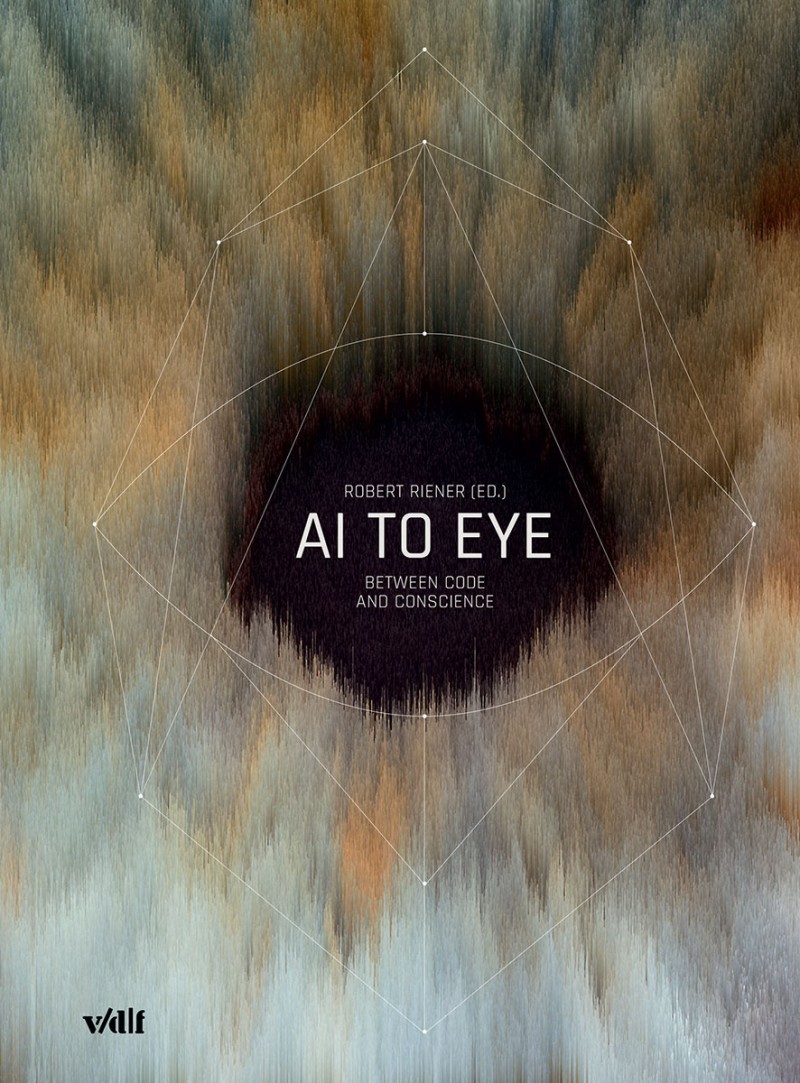

AI TO EYE
- Between Code and Conscience
Artificial Intelligence, Machine Intelligence, User Experience, Human Experience, Work Experience, Human Responsibility, Creativity, Ethical Awareness, AI Privacy, Security, Intellectual Property, Data-Driven Societies
AI TO EYE: Between Code and Conscience offers a concise and vivid portrait of how artificial intelligence is reshaping contemporary society. In addition to insights drawn from literature and the wider cultural record, 14 short essays and a rich mosaic of voices from more than 40 interviews unite perspectives on this topic from science, industry, journalism, film, music, and the arts. Rather than explaining AI in technical terms, this volume presents a human-centered view of how people across disciplines experience the ongoing debate and apply this powerful technology. From education and media to healthcare and the creative industries, the contributors illuminate both the emerging opportunities and the challenges of an AI-driven world. AI TO EYE blends contemporary conversations with enduring ideas from culture and intellectual history to deliver a polyphonic and highly quotable cultural document that meets AI "eye to eye."
Dieser Titel ist für den Buchhandel auch über Distrinova erhältlich.
"... Ohne auf die gesellschaftlich ebenfalls relevanten Nachhaltigkeitsfragen (Energie- und Rohstoffverbrauch) einzugehen, wirft das Buch einen abwechslungsreichen Blick auf einige aus gesellschaftlicher Sicht zentrale Aspekte und Themen. Eine willkommene Einladung, der künstlichen Intelligenz gemäss dem Buchtitel «AI to eye» tiefer ins Auge zu schauen. Denn nur durch die kritische Auseinandersetzung mit realen KI-Anwendungen lernt man, ihre Stärken zu schätzen und ihre Schwächen zu kennen, um sie bei Bedarf als Werkzeug sinnvoll einsetzen zu können."
(Radomír Novotný, bulletin.ch 6/2026)
Zen Koh auf goodreads, 16.8.2026:
AI TO EYE: Between Code and Conscience is an unusually thoughtful contribution to the crowded discussion around artificial intelligence. Edited by Robert Riener, the book brings together fourteen essays and more than forty voices across healthcare, disability, education, work, art, music, privacy, journalism, intellectual property, ethics and the nature of intelligence. Its strength is precisely this breadth. Rather than asking only what AI can do, it repeatedly returns to the more important question: "what should remain under human judgement and responsibility as machines become increasingly capable?"
The chapters I found most compelling are those on healthcare, education and work, privacy, journalism and intellectual property. They move beyond the simplistic "AI versus humans" framing and examine how AI changes professional judgement, trust, accountability and the skills we need to develop.
The book is also strongest when its humanism is practical rather than absolute. At times, some essays move too quickly from observing that current AI lacks lived experience, consciousness or genuine empathy to implying that such boundaries are permanent. Given how rapidly AI capabilities are evolving, I would have preferred a little more uncertainty here. We do not need to prove that machines can never create, understand or appear empathetic in order to argue that human agency, dignity and responsibility matter. That tension is actually what makes the book valuable.
My biggest takeaway is that as intelligence-like output becomes cheaper and more abundant, judgement becomes more valuable. The important question may soon be less "Can AI produce the answer?" and more "Who decides whether the answer should be trusted, acted upon and ultimately accepted responsibility for?"
AI TO EYE does not pretend to provide a final theory of artificial intelligence. It is better understood as a cultural and intellectual snapshot of an extraordinary moment, when the boundary between code and human agency is being renegotiated almost in real time. A stimulating and accessible read for anyone interested not only in where AI is heading, but in what its progress forces us to reconsider about ourselves. Highly recommended for the questions it makes difficult, rather than for the answers it makes comfortable.
Patricia auf amazon.com, 3.9.2026
5 stars: Thoughtful & engaging read on AI and societal implications
"Eye to AI" (from the idiom "eye to eye") is a beautiful book written by Robert Riener that conveys the nuances around AI, including its dangers and potential in the fields of health, creativity, education, and so so much more. I recommend this reading for anyone working on AI and robotics (especially to high school and university students!)
I leave below two of my favorites quotes that express the tension around AI in the creative domain:
"Copyright protection must apply only top the work of real artists and composers. Purely AI-generated output should not qualify." - Robbert Baruch
"AI doesn't 'steal' ideas; it learns from existing works in much the same way that young artists learn, by studying galleries, engaging with mentors, and exploring creative communities." - Georges Khneysser
Podcast Wissenschaft hören
In unserem Podcast möchten wir Ihnen unsere Publikationen auch übers Ohr näherbringen: ein Überblick über die Thesen eines wissenschaftlichen Werkes oder ein Ausschnitt aus einem Buch zum Beispiel – aufbereitet als Diskussion zum Hören. KI macht’s möglich – wir nutzen die neue Technik. Alle Inhalte sind von Verlag und Autor:innen autorisiert. Hören Sie rein statt selbst zu lesen!
Die Podcast-Folge zu diesem Titel bringt Ihnen die Themen der Publikation als Dialog näher. Z.B. unter Zusatzangebote (siehe unten) oder auf
- Auflage: 1., 2026
- Seiten: 138 Seiten
- Format in cm: 17,0 x 24,0
- Einbandart: Klappenbroschur
- ISBN: 978-3-7281-4228-3
- Sprache: Englisch
- Publikationsart: Sammelband
- Lieferstatus: lieferbar
Zusatzangebote
| Name | Dateityp | Zugriff |
| Table of Contents / Inhaltsverzeichnis | PDF-Dokument | |
| Extract / Leseprobe | PDF-Dokument | |
| Podcast | MP3 |
- Preis CHF 39,00 | € 42,00